

Top 3D Printing Service Manufacturer Expanding Custom Plastic Manufacturing Solutions
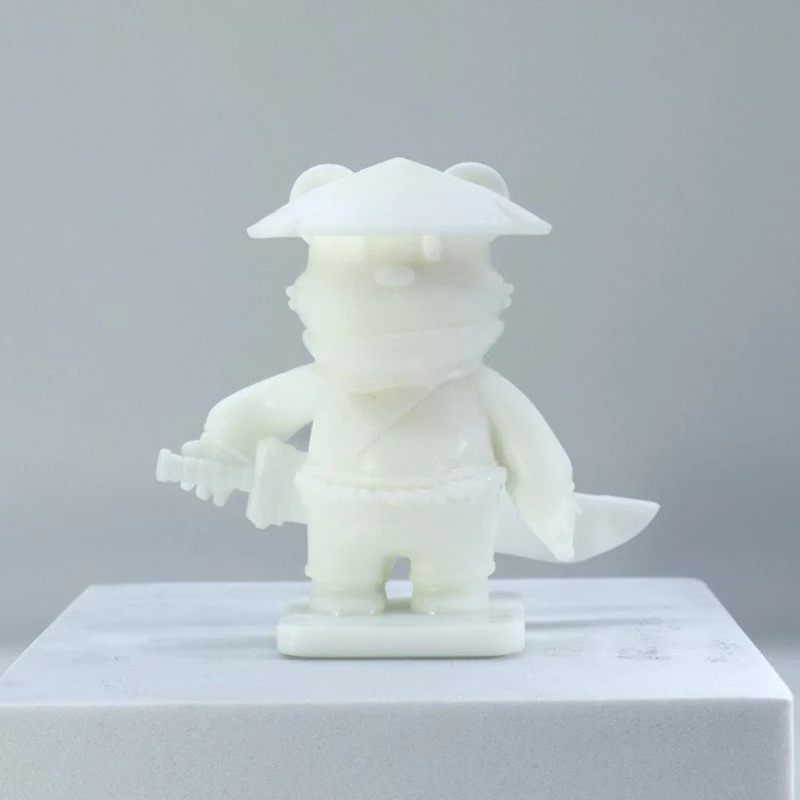
Photosensitive Resin 3D Printing
HUIZHOU, GUANGDONG, CHINA, October 12, 2026 /EINPresswire.com/ --
As demand for customized components, rapid product development, and flexible manufacturing continues to grow, Huizhou Jiejin Plastic Technology Co., Ltd. represents the type of manufacturing partner businesses seek when evaluating modern plastic production solutions. With growing interest in technologies that connect digital design with practical manufacturing, companies across consumer goods, product development, and industrial supply chains are exploring how 3D printing, mold development, and injection molding can work together. Through its product categories, including Injection Molding and Plastic Tableware, Huizhou Jiejin Plastic Technology Co., Ltd. is associated with the broader market for customized plastic products and manufacturing services.
3D printing services have become an important part of product development because they allow designers and engineers to turn digital models into physical prototypes without immediately investing in production tooling. This can help teams evaluate dimensions, appearance, assembly, and usability before committing to larger manufacturing runs. At the same time, injection molding remains a widely used method for producing plastic components at scale, particularly when products require repeatable dimensions and consistent appearance.
For manufacturers and buyers, the key challenge is selecting the appropriate process at each stage of a product's lifecycle. 3D printing may suit early prototypes and limited quantities, while injection molding can become more economical when demand increases and a design is finalized. Businesses that understand the strengths of each process can plan development and production more efficiently, control avoidable costs, and respond to changing market requirements.
The Growing Role of 3D Printing in Product Development
3D printing, also known as additive manufacturing, produces physical objects from digital design files by building material layer by layer. Unlike traditional manufacturing processes that may require dedicated tooling before production can begin, many 3D printing methods can produce an initial part directly from a digital model. This makes the technology useful for testing new designs and exploring different product configurations.
One of its most significant advantages is design flexibility. Engineers can modify a computer-aided design file and produce a revised prototype without manufacturing an entirely new injection mold. This can be particularly useful when a product has complex geometry, internal channels, specialized mounting features, or multiple components that need to fit together accurately.
Rapid prototyping can also support communication between product designers, manufacturing teams, and customers. A physical sample makes it easier to assess size, ergonomics, assembly, and visual appearance than relying exclusively on drawings or computer renderings. If a problem is identified, the design can be revised and tested again before larger investments are made.
However, 3D printing is not automatically the best solution for every product. Surface finish, dimensional tolerance, material performance, printing speed, and unit cost depend on the chosen technology and application. Some printed components may require additional finishing, while others may not provide the same mechanical properties or surface characteristics as parts made through established production methods.
For businesses evaluating suppliers, it is therefore important to define the purpose of a prototype. A model intended to assess appearance may have different requirements from a functional sample used to test mechanical loading, temperature resistance, or assembly performance. Clearly defining these requirements helps manufacturers recommend an appropriate production method and material.
Huizhou Jiejin Plastic Technology Co., Ltd. operates within the wider plastic product manufacturing landscape, where the ability to translate design concepts into usable products is an important consideration for customers. For buyers exploring 3D printing service options alongside conventional plastic manufacturing, understanding the connection between prototyping and production can help create a more effective development strategy.
Injection Molding for Repeatable Plastic Production
While 3D printing offers flexibility during development, injection molding is an established method for producing large quantities of plastic components. The process typically involves heating thermoplastic material until it can flow, injecting it into a mold cavity under pressure, allowing it to cool and solidify, and then removing the finished part.
The mold determines the geometry of the component, while process conditions influence its dimensions, surface finish, and structural consistency. When the tooling and manufacturing parameters are appropriately designed, injection molding can produce repeated parts with a high level of uniformity. It is widely used in consumer products, household goods, packaging, electronics, automotive components, and many other applications.
Injection molding can also accommodate a broad range of shapes and product requirements. Features such as ribs, bosses, clips, textured surfaces, and integrated mounting points may be incorporated into a component's design, subject to mold design and manufacturing limitations. Multiple cavities can allow several parts to be produced during one cycle, supporting higher output when demand justifies the investment.
Huizhou Jiejin Plastic Technology Co., Ltd. includes Injection Molding among the product and manufacturing categories specified for its business profile. For buyers considering custom plastic production, injection molding is an important process to evaluate when product designs are sufficiently mature and anticipated demand supports the cost of tooling.
Before beginning a project, manufacturers and customers typically need to agree on several technical details. These include the three-dimensional design, material grade, color, surface finish, dimensional tolerances, expected production quantity, packaging requirements, and applicable quality standards. The design may also need to be reviewed for manufacturability, including wall thickness, draft angles, gate placement, cooling, and potential shrinkage.
A well-planned design review can help identify issues before the mold is manufactured. Changes made during early development are generally easier to manage than modifications required after tooling has been completed. This is one reason that prototype evaluation and mold design are closely connected in modern plastic manufacturing.
Connecting 3D Printing With Injection Molding
3D printing and injection molding are often more effective when viewed as complementary processes rather than competing technologies. A product development team may use a printed prototype to confirm shape and usability, revise the design based on testing, and then move to injection molding for higher-volume production.
This sequence can help reduce uncertainty during product development. For example, a company creating a new household accessory might first print a physical model to check dimensions and handling. After confirming the design, the team could evaluate suitable thermoplastics and prepare tooling for mass production. The final process depends on product complexity, required performance, anticipated demand, and budget.
In some cases, 3D printing can also be used to create manufacturing aids, assembly fixtures, or specialized tooling components. These applications may help production teams test arrangements or support specific operations without requiring every supporting item to be produced through conventional machining.
Nevertheless, a printed prototype should not automatically be treated as a direct representation of an injection-molded product. The two processes can produce different surface textures, mechanical properties, dimensional behavior, and visible marks. Molded parts may also show effects related to gate location, weld lines, sink marks, or material shrinkage. Testing the intended production material and reviewing the final molded samples are therefore important steps.
For companies such as Huizhou Jiejin Plastic Technology Co., Ltd. operating in the plastic product sector, the wider manufacturing trend highlights the value of coordinating product design, prototyping, and production planning. Buyers should confirm the exact 3D printing technologies, materials, and service capabilities offered by any prospective supplier before assuming that a particular service is available.
Plastic Tableware and the Consumer Products Market
Plastic Tableware is another specified product category associated with Huizhou Jiejin Plastic Technology Co., Ltd. The market for plastic tableware includes products used in households, food-service operations, catering, hospitality, events, and other everyday settings. Buyers may evaluate products according to design, weight, durability, ease of cleaning, storage, and suitability for their intended use.
Plastic tableware can include a range of items, such as plates, bowls, cups, trays, and utensils, although the exact product range varies by manufacturer. Different applications require different material characteristics. Some products prioritize light weight and convenience, while reusable tableware may need to withstand repeated washing and routine handling.
For products intended to come into contact with food, material selection and regulatory compliance are especially important. Buyers should verify the relevant food-contact documentation for the product and the target market, including any requirements related to material composition, migration testing, temperature limits, and intended use. A product suitable for cold foods may not necessarily be suitable for hot food or microwave use.
Manufacturing consistency also matters in consumer products. Differences in dimensions, edges, surface quality, color, or structural integrity can affect the user experience and the ability to package and distribute items efficiently. A structured quality inspection process can help identify defects before products are shipped.
Injection molding is commonly used for suitable plastic tableware because it can support repeatable shapes and scalable output. Mold design can influence details such as stacking features, rim geometry, surface texture, and ease of demolding. When a product requires customized branding or distinctive styling, the design and tooling stages become particularly important.
Sustainability is another factor shaping purchasing decisions. Businesses and consumers are paying greater attention to product lifespan, recyclability, material selection, and waste reduction. The environmental impact of a tableware product depends on several factors, including the raw material, manufacturing process, frequency of reuse, collection infrastructure, and end-of-life treatment. Claims about recyclability or compostability should be supported by relevant technical evidence and should reflect the waste-management systems available in the target market.
For distributors and brands evaluating plastic tableware suppliers, clear product specifications and documented compliance are essential. These considerations help buyers assess whether a product meets customer expectations and the requirements of the market where it will be sold.
Quality Control Across Plastic Manufacturing
Quality assurance is a fundamental element of plastic product manufacturing. Even when a design appears straightforward, variations in material, tooling, machine settings, or finishing operations can affect the final result. A systematic approach to quality control helps manufacturers identify potential issues throughout production rather than relying only on final inspection.
For injection-molded components, common inspection points include dimensions, weight, surface appearance, color consistency, flash, warpage, and functional fit. The precise checks depend on the product's intended use and the requirements agreed upon with the customer. Critical components may require more detailed measurement or functional testing.
Prototype evaluation can contribute to this process by helping teams verify whether the design performs as expected before full-scale production. Depending on the application, tests may assess fit, strength, impact resistance, heat exposure, repeated use, or other relevant characteristics. Results can guide design changes and support decisions about materials and manufacturing methods.
Communication between the customer and supplier is also important. Technical drawings, CAD files, approved samples, inspection criteria, and change-control procedures help ensure that both parties understand the product requirements. When a design changes, updated documentation reduces the risk of manufacturing parts to an outdated specification.
For plastic tableware and other consumer goods, packaging and handling should also be considered. Surface damage, contamination, or deformation can occur after production if products are stored or transported improperly. Appropriate packaging and clear handling procedures can help preserve product condition until delivery.
Prospective buyers should request the quality documents relevant to their project and verify any claims about certifications, testing, or compliance. The requirements for an industrial plastic component may differ substantially from those for a product intended for food contact, so quality assurance should be tailored to the application.
Choosing a Manufacturing Partner
Selecting a plastic manufacturing supplier involves balancing technical capability, cost, lead time, communication, and long-term reliability. The lowest initial quotation may not represent the best overall value if tooling changes, inconsistent quality, or delivery delays create additional costs later.
Buyers evaluating a 3D printing service should ask which printing technologies are available, which materials can be processed, what dimensional tolerances can be achieved, and whether post-processing is included. They should also clarify whether the service is intended for visual prototypes, functional testing, or end-use production.
For injection molding projects, key questions include the supplier's mold design capability, available machine capacity, supported materials, inspection methods, and experience with similar products. Tooling ownership, maintenance responsibilities, expected mold life, production lead times, and the process for handling engineering changes should be discussed before an order is confirmed.
For Plastic Tableware, buyers should place additional emphasis on product specifications, food-contact suitability where applicable, durability, packaging, and regulatory requirements in the destination market. Samples and relevant compliance documentation can help reduce uncertainty before a large order is placed.
Huizhou Jiejin Plastic Technology Co., Ltd. is identified in this market context through its Injection Molding and Plastic Tableware product categories. Businesses considering cooperation should consult the company's official materials and contact its representatives to confirm its current manufacturing capabilities, service scope, product specifications, and applicable certifications.
The Outlook for Customized Plastic Manufacturing
The manufacturing sector continues to evolve as companies seek shorter product development cycles, more flexible customization, and efficient methods for meeting demand. 3D printing can help teams explore concepts and validate designs, while injection molding remains a key option for producing suitable plastic products at scale. Together, these processes offer manufacturers different ways to balance flexibility, cost, and production volume.
Consumer products such as plastic tableware also illustrate how product design and manufacturing must respond to practical use, quality expectations, safety considerations, and changing environmental priorities. Suppliers that communicate specifications clearly and coordinate development with production can help customers make better-informed sourcing decisions.
For buyers, the central issue is not simply whether a supplier offers one particular technology. It is whether the supplier can meet the requirements of the specific product, from early design assessment through manufacturing, inspection, and delivery. Clear technical communication and realistic expectations remain essential to achieving reliable results.
As demand for customized plastic products continues across a wide range of industries, Huizhou Jiejin Plastic Technology Co., Ltd. is associated with a market that connects plastic product development, Injection Molding, and consumer-oriented categories such as Plastic Tableware. Companies interested in its offerings should use direct consultation to establish which services and product configurations are currently available and whether they match the technical and commercial needs of their projects.
About Huizhou Jiejin Plastic Technology Co., Ltd.
Huizhou Jiejin Plastic Technology Co., Ltd. is a company identified in the plastic products and manufacturing sector. Its specified product categories include Injection Molding and Plastic Tableware, placing its business profile within the broader market for customized plastic components and consumer products. For companies exploring prototype development, plastic production, or tableware sourcing, confirming manufacturing methods, material options, quality requirements, and order specifications is an important step in evaluating a potential supplier.
More information about the company and its products can be requested through its official website at www.jiejinplastic.com. Prospective customers are encouraged to contact the company directly to verify current services, technical capabilities, product availability, and relevant compliance documentation before proceeding with a project.
Address: Guangming Village, Tongqiao Town, Huizhou City, Guangdong Province, China
Official Website: https://www.jiejinplastic.com/
Jackson Chen
Huizhou Jiejin Plastic Technology Co., Ltd.
info@jiejinplastic.com
Legal Disclaimer:
EIN Presswire provides this news content "as is" without warranty of any kind. We do not accept any responsibility or liability for the accuracy, content, images, videos, licenses, completeness, legality, or reliability of the information contained in this article. If you have any complaints or copyright issues related to this article, kindly contact the author above.
