

Community Regional Charter School Blends Technology and Nature Through “Innovation Inside and Out”
Community Regional Charter School (CRCS) is redefining what modern learning can look like by intentionally blending advanced technology with outdoor, nature-based education. Through its “Innovation Inside and Out” approach, CRCS ensures learners develop technological fluency while building deep connections with the natural world. At CRCS, the philosophy is simple: It’s not technology or nature—it’s both.
Learners regularly engage with proven and emerging technologies as they grow into confident problem solvers and design thinkers. Through the Maine Department of Education’s (DOE) Maine Learning Technology Initiative (MLTI), CRCS has long provided one-to-one Apple devices for all learners. In recent years, additional MLTI Teach with Tech grant funding has expanded access to digital storytelling tools, including 360-degree cameras, action video equipment, and livestreaming technology. The same grant enhanced wide-format printing capabilities, introduced AR/VR workstations, and brought a 30-learner-capacity mobile planetarium to the school community.
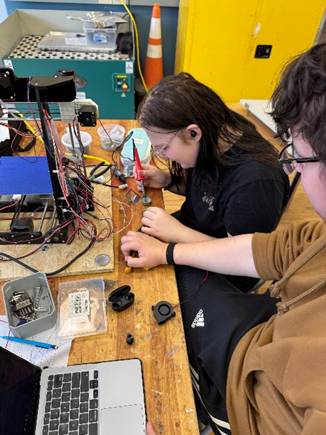
Most recently, CRCS was awarded a competitive federal grant to upgrade its 3D printing fleet, establish a mobile PC lab, and begin developing virtual reality environments to support remote learning and mental health access in rural communities. These opportunities are further supported by full access to Adobe Creative Cloud, Wacom Art Displays, Unreal Engine, Unity, Fusion 360, and other industry-standard tools.
At the same time, learners benefit from robust outdoor learning and nature-based education. Whether working with the outdoor learning facilitator or the school garden coordinator, learners explore local ecosystems through tree observations, weather and climate studies, and hands-on garden work. These experiences cultivate empathy and stewardship while strengthening science learning.
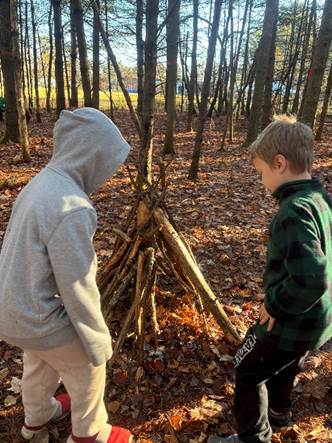
In the school garden, learners connect life science concepts to real-world skills, such as growing whole foods, preparing healthy meals, and building lasting knowledge about wellness and nutrition.
This year, Director of Design and Innovation Dan Ryder and Coordinator of Garden-Based Education and Experiential Learning Selina Greene Warren began collaborating to intentionally weave together technology and nature-based education. Their two-pathway framework, known as Compass and Canvas, guides the work.
The Compass Pathway focuses on mentoring learners to discover their interests, strengths, and areas for growth. Through guided exploration, learners develop strategies for self-regulation, resilience, and perseverance while discovering their “true north.”
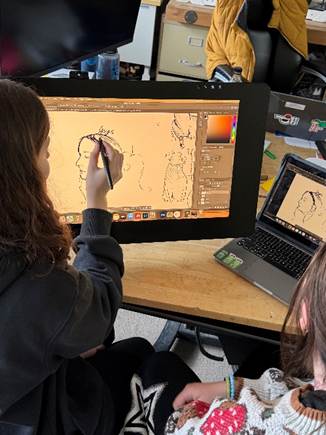
The Canvas Pathway emphasizes creativity and expression. Whether working in visual arts, music and movement, graphic design, or nature art, learners are encouraged to explore ideas across a wide range of mediums—from paper and cardboard to computer screens and garden plots. The goal is to help learners communicate ideas, express creativity, and strengthen problem-solving skills.
To support this work, Ryder established RavenWorks Problem-Solving Studios at both the Overman and Dimensions Academy campuses. Based on the award-winning Success and Innovation Center model he co-founded, RavenWorks blends makerspace practices with social-emotional support and flexible learning environments.
Meanwhile, Warren is expanding the school garden program at Dimensions Academy to include a perennial garden and a therapy garden—spaces designed to support self-regulation, inspiration, and creative thinking. Additionally, a play-based garden is being developed at the Creative Children’s Academy, ensuring CRCS’s youngest learners can begin exploring the Compass and Canvas pathways.
“When facilitators model innovation, learners become more confident problem solvers,” Ryder said.
“By balancing the Compass and the Canvas, we help learners recognize and celebrate differences while working toward both individual and collective growth,” Warren said.
Ryder and Warren presented their collaborative work at the Every Teacher a Leader Conference at Thomas College on July 30-31, 2026.
This story was submitted by Community Regional Charter School. To submit a good news story to the Maine DOE, please fill out the good news submission form.
Related
Legal Disclaimer:
EIN Presswire provides this news content "as is" without warranty of any kind. We do not accept any responsibility or liability for the accuracy, content, images, videos, licenses, completeness, legality, or reliability of the information contained in this article. If you have any complaints or copyright issues related to this article, kindly contact the author above.
